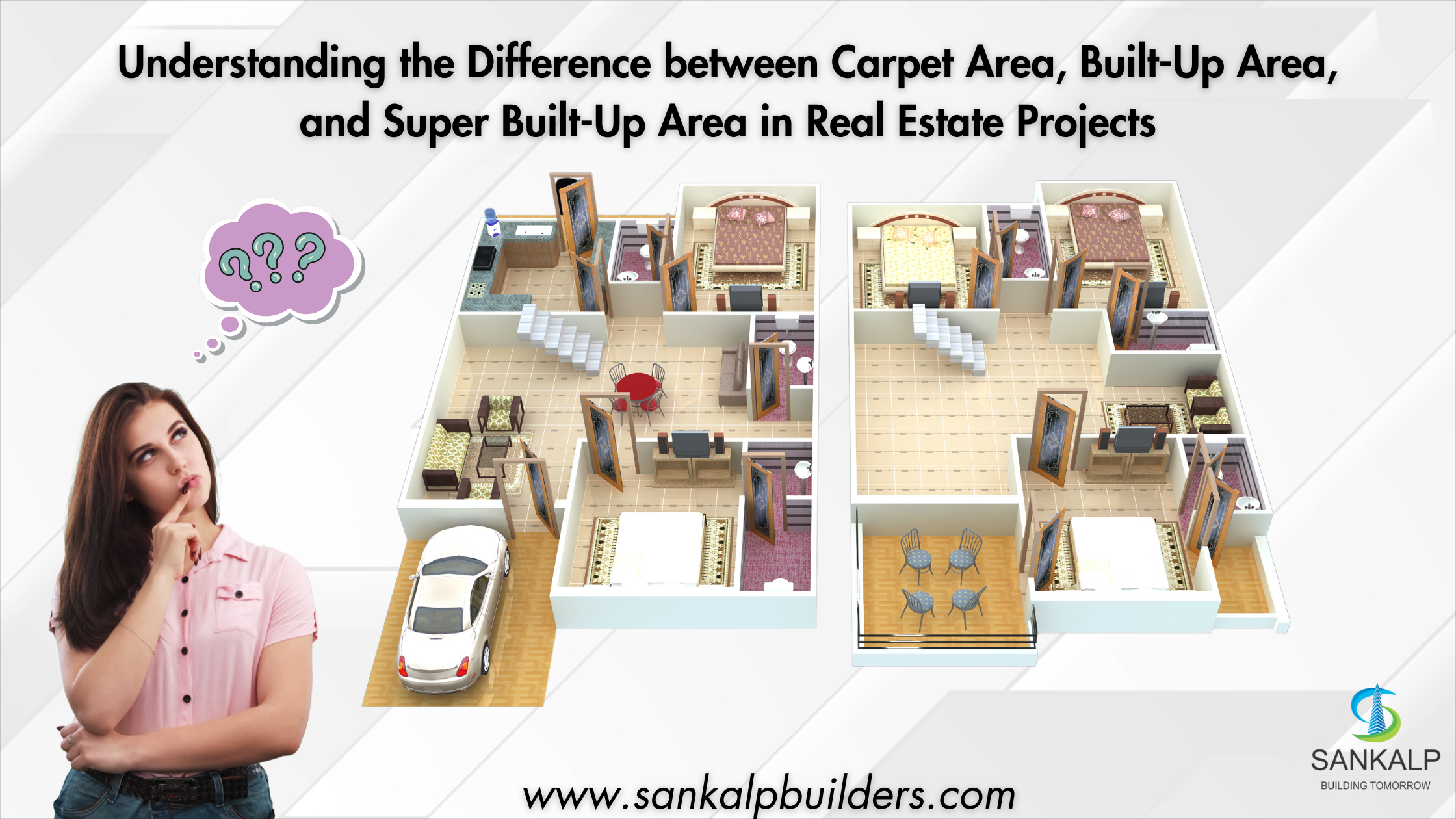
Why these three “areas” matter so much
When you visit a flat, you usually judge it with your eyes: room size, light, ventilation, and the feel of the layout. But when you pay for that flat, the discussion often turns into numbers like carpet area, built-up area, and super built-up area, and that is where many buyers get confused.
If you are dealing with real estate developers in Jaipur, you should treat these terms as a basic skill, not as “technical knowledge.” One clear understanding here can protect your budget and help you shortlist homes faster, especially when you compare premium projects and amenity-rich societies.
Carpet area (the space you actually live in)
Carpet area is the most practical number for a homebuyer because it shows the usable floor space inside your apartment. Under the Real Estate (Regulation and Development) Act, 2016, “carpet area” means the net usable floor area of an apartment, excluding the external walls and service shafts, and excluding exclusive balcony/verandah and exclusive open terrace areas, but including internal partition walls.
In simple words, the carpet area is where your daily life happens. This is the space where you place your bed, dining table, sofa, and storage, and still have room to walk around comfortably.
Built-up area (carpet area plus the “structure share”)
Built-up area usually includes carpet area plus the thickness of walls and certain attached spaces like balconies and ducts, depending on how the builder defines it in their documents. Many buyers assume built-up area equals “my usable space,” but that is not true, because built-up area includes parts you cannot use as living floor space.
Here is the easiest way to think about a built-up area: it is your apartment’s constructed footprint. It often feels bigger than the carpet area, but it does not mean your living room suddenly becomes larger.
Super built-up area (saleable area + common area share)
A super built-up area is often called the “saleable area.” It typically includes your apartment’s built-up area plus a share of common spaces like lobbies, corridors, staircases, lift areas, and amenities like a clubhouse or gym, depending on the project’s planning.
Sankalp Group explains it similarly in its own guide and notes that developers often price homes based on super built-up area because it includes common amenities and facilities. This is not automatically “bad,” because you really do use many common spaces over the years. But it can become misleading when buyers assume a super built-up area equals “my inside space.” A bigger super built-up area can simply mean a bigger common area share, not a bigger apartment.
Loading percentage (the hidden bridge between carpet and super built-up)
Loading is the difference between super built-up and carpet area, usually shown as a percentage. Higher loading often means you pay for more common area share, which can happen in projects with larger lobbies, wider corridors, multiple lifts, and bigger amenity zones.
A practical way to use loading:
- If loading is reasonable, you might actually enjoy better common areas and smoother movement in the building. If loading is very high, you should ask why, because you may be paying a lot for spaces you rarely use.
How these areas impact pricing (and your decision)
Most buyers do not “overpay” because the builder cheats them directly. Buyers overpay when they compare homes using different measurement bases, or when they ignore what is included and excluded.
Use this simple comparison method:
- Compare carpet area first, because it is the most lifestyle-relevant number.
- Check loading next, because it tells you how much common share you are paying for.
- Then look at amenities and ask, “Will my family actually use these?”
Why carpet area matters more after RERA
RERA brought a clearer, legal definition of carpet area, which helps buyers compare homes with less confusion. The definition under the Act makes it clear what to exclude and what to include, so “carpet area” becomes a consistent yardstick across many projects.
Why builders use super built-up for pricing (and how to judge it fairly)
Builders use super built-up area because a project is not only your flat; it is also lifts, corridors, fire safety spaces, services, and amenities that need construction and long-term maintenance. So pricing on a saleable area basis can be a business method to distribute the cost of shared spaces.
This is also where brand trust starts to matter. Sankalp Group’s official project lineup shows multiple formats of flats in Jaipur, including The Index and Alexa Homes in Jagatpura, Spectrum 21, The Rise, Suparshwa Aangan, and Tatvam. When a group runs several active projects, it usually has a more standardized way of sharing plans and specifications, which can make buyer communication smoother.
Jaipur examples: where Sankalp projects fit
If your shortlist includes 3 BHK Flats in Jagatpura, you will likely compare projects where lifestyle and amenities play a big role, which means loading can also vary. Sankalp Group’s The Index is listed as an ultra-luxury 2/3/4 BHK apartment-led project with shops and offices in Jagatpura, which naturally suggests a premium, amenity-oriented planning style.
Sankalp Group’s own area guide also points readers toward The Index and describes it as a flagship project with spacious kitchens, balconies, and generous common areas with amenities. This is a good example of why you should not judge “common areas” as wasted space every time, because in premium living, wider common areas can improve daily comfort, security flow, and overall building experience.
Like this post? We share interesting articles, interior ideas and real estate news twice a month. Do care to follow us on Face Book, Instagram, LinkedIn and Subscribe to our YouTube Channel.
FAQs
- What is the difference between carpet area, built-up area, and super built-up area?
Carpet area is your usable floor space inside the apartment, and RERA gives it a clear legal meaning. Built-up area adds the space taken by walls and some attached structural parts, while super built-up area adds your share of common areas like corridors, lift lobbies, and amenities, which is why it is often called saleable area. - What is the carpet area in RERA?
Under the Real Estate (Regulation and Development) Act, 2016, carpet area means the net usable floor area of an apartment, excluding external walls and service shafts and excluding exclusive balcony/verandah and exclusive open terrace areas, but including internal partition walls.

Anil Shah
The Anil Shah editorial team writes about Jaipur real estate - market trends, home-buying guides, RERA updates and investment insights - drawing on 25+ years of building landmark residential and commercial projects across the city.


Looking for your dream property in Jaipur?
Explore RERA-certified homes & commercial spaces by Sankalp Group. Book a free site visit today.