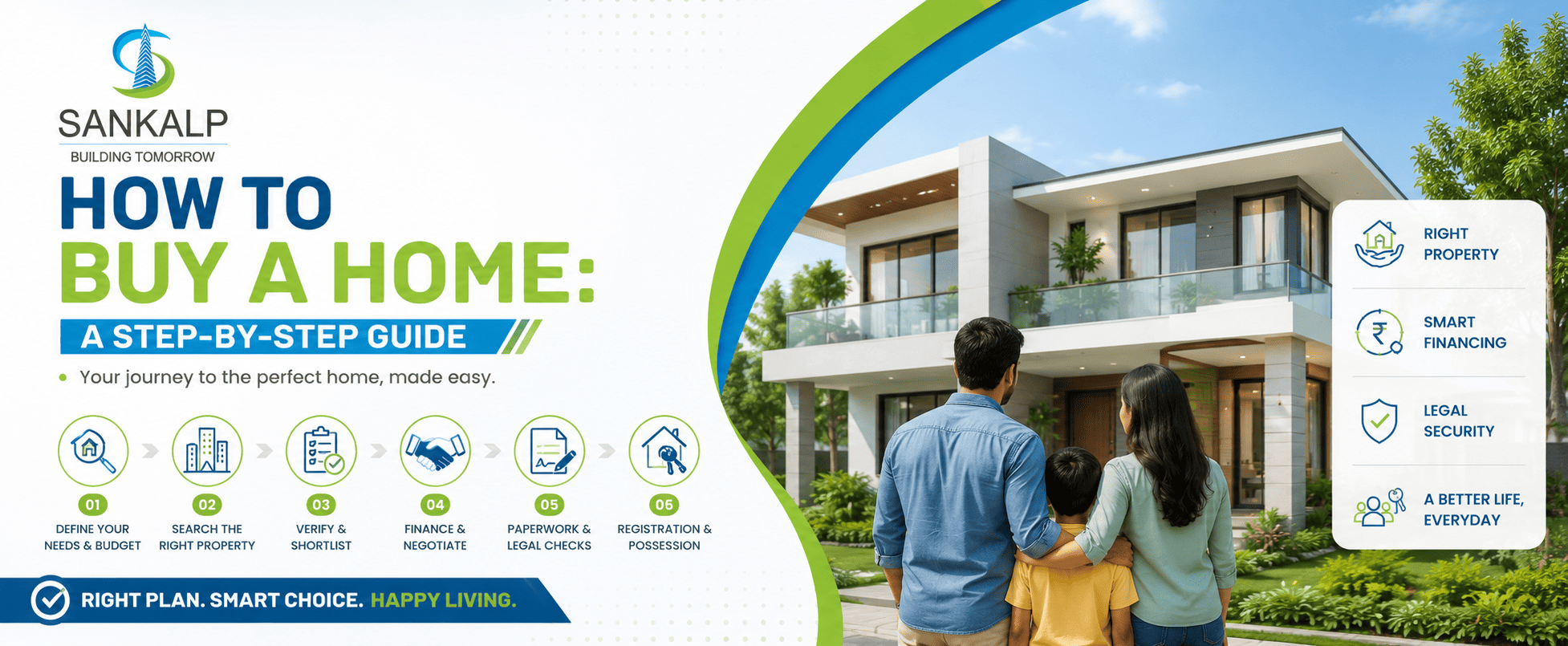
How to Buy a Home: A Step-by-Step Guide
Buying your first home is exciting, but the process can feel overwhelming when you are not sure where to start. Learning how to buy a home step by step, from checking your finances to collecting the keys, turns a daunting task into a clear path. This guide walks first-time buyers through each stage in plain language, with practical rules and checks that protect your money along the way.
Step 1: Check Your Financial Readiness
Before you fall in love with a property, understand what you can afford. This first step shapes everything else.
- Compare your monthly income against your regular expenses
- Check your credit score, since it affects your loan and interest rate
- Clear or reduce existing debts where you can
- Save for a down payment, usually 20 to 25 percent of the price
- Keep an emergency fund separate from your home budget
Knowing your real numbers early stops you from stretching for a home that strains your finances.
Step 2: Set a Realistic Budget
The property price is never the full cost. When planning how to buy a house, budget for everything.
- Down payment and home loan EMI
- Stamp duty and registration charges
- GST on under-construction property, where it applies
- Brokerage, legal and documentation fees
- Interiors, furnishing and maintenance charges
Only when you add these up do you know the true cost of owning the home.
What Is the 20 30 40 Rule for Buying a House?
This is a popular rule of thumb that helps first-time buyers keep a purchase affordable. In its common form:
- 20 means putting down at least a 20 percent down payment, which most lenders expect and which lowers your EMI
- 30 means keeping your home loan EMI to around 30 percent of your monthly income, so the repayment stays comfortable
- 40 means keeping your total loan or property cost within a sensible multiple of your income, and aiming to repay within a manageable term
Different versions of the rule exist, some written as 5/20/30/40 or 3/20/30/40, so treat it as a helpful guide rather than a fixed law. The point is simple: borrow within your means and keep a cushion.
Step 3: Decide What Type of Home You Need
Match the home to your life now and a few years ahead.
- Flat, builder floor or independent house
- Ready-to-move or under-construction
- The configuration, from 1 BHK to 4 BHK or larger
- Gated community or standalone building
Someone comparing apartments in Jaipur for a growing family will weigh these differently from a single buyer, so decide your priorities first.
Step 4: Choose the Right Location
Location drives both your daily life and your home's future value. When deciding how do I buy a house in the right area, look at:
- Connectivity, roads and public transport
- Schools, hospitals and daily markets nearby
- Employment hubs within reasonable reach
- Funded future infrastructure, like a metro corridor
- Neighbourhood safety and character
An average home in a strong location usually beats a fine home in a weak one.
Step 5: Arrange Your Home Loan
Most first-time buyers need a loan, so compare before you commit.
- Check your eligibility and the loan-to-value ratio, usually 75 to 80 percent
- Compare interest rates, fixed versus floating, across lenders
- Weigh the tenure, EMI, processing fees and prepayment rules
- Consider getting pre-approved, which sets a clear budget and strengthens your position
A small difference in interest adds up to a large sum over a long tenure, so shop around.
Step 6: Shortlist and Visit Properties
Never buy on photos alone. Shortlist a few options and visit each one.
- Inspect construction quality, light and ventilation
- Check water supply, power backup, lifts and parking
- Look at security, fire safety and common areas
- Visit at different times of day to judge noise and traffic
Ready to move flats in Jaipur let you see exactly what you are buying before you decide, which is a real advantage for a first-time buyer.
Step 7: Verify the Property and Documents
This step prevents the costliest mistakes, so never skip it.
- Confirm the RERA registration on the state portal
- Verify the title deed and get an encumbrance certificate
- Check the approved building plan and land use
- For a ready home, insist on the completion or occupancy certificate
The government portals show the truth that a brochure may not, so verify before you pay anything.
Step 8: Negotiate and Book
The quoted price is rarely final. Discuss the base price, floor-rise, parking and clubhouse charges, and any maintenance deposits. New launches and festive offers often carry room to negotiate. Once you agree, pay the booking amount, get a proper receipt, and read the cancellation and refund terms before paying.
Step 9: Sign the Agreement and Complete the Loan
The agreement for sale makes the deal binding. Check that it clearly states the payment schedule, possession date, cancellation clauses and delay compensation. Alongside this, your lender completes its document, legal and technical checks before sanctioning and disbursing the loan.
Step 10: Register the Property and Take Possession
Registration transfers the title into your name. You pay the stamp duty and registration charges, sign the sale deed before the sub-registrar with the seller, and collect the registered documents. Before accepting possession, inspect the home, test the fittings and connections, record any defects in writing, and collect the keys.
What Is the Best Way to Buy a Home?
The best way to buy a home is methodically, not emotionally. Fix your budget first, get your loan pre-approved, choose location and builder carefully, verify every document, and negotiate on facts. Rushing or buying on emotion is how people overpay or overlook a problem, so take each step in order and never skip the verification.
Is Buying a Home a Good Option?
For many people, yes. Buying gives you a place of your own, protection from rising rent, and an asset that can grow in value over time. It also builds long-term security. That said, it ties up capital and commits you to a location and a loan, so it suits those ready to settle and able to afford the full cost. Renting can be better if you value flexibility or are unsure of your plans. The right choice depends on your finances and your life stage.
How to Buy a House in India: A Quick Summary
To bring it together, the home buying journey in India runs: check your finances, set a full budget, pick the type and location, arrange and pre-approve your loan, shortlist and visit, verify RERA and documents, negotiate and book, sign the agreement, complete the loan, and register before taking possession. Among the top builders in Jaipur, the reliable ones make this smoother by sharing documents openly and delivering on their commitments.
Conclusion
Learning how to buy a home is really about method and patience. Check your finances, budget for the full cost, follow a rule of thumb like the 20/30/40 guide to stay affordable, verify every document, and take possession only after a proper inspection. Do these in order, and one of life's biggest decisions becomes calm and manageable. Whether you are buying flats in Jaipur or a home anywhere else, the careful, well-prepared buyer is the one who ends up happy.
FAQs
1. What is the first step to buying a home?
Check your finances. Know your income, expenses, credit score and the down payment you can afford before looking at properties, so you shop within a realistic budget from the start.
2. What is the 20 30 40 rule for buying a house?
It is a rule of thumb for keeping a purchase affordable: put down at least 20 percent, keep your EMI to around 30 percent of monthly income, and keep the loan or property cost within a sensible multiple of your income. Versions vary, so use it as a guide.
3. How much down payment do I need to buy a home in India?
Lenders usually finance 75 to 80 percent of the property value, so you typically need a down payment of 20 to 25 percent, plus stamp duty, registration and other costs on top.
4. Is it better to buy a ready-to-move or under-construction home?
Ready homes let you see exactly what you are buying and move in at once, while under-construction ones may cost less but involve a wait and more reliance on the builder. Choose based on your budget and timeline.

Anil Shah
The Anil Shah editorial team writes about Jaipur real estate - market trends, home-buying guides, RERA updates and investment insights - drawing on 25+ years of building landmark residential and commercial projects across the city.

Looking for your dream property in Jaipur?
Explore RERA-certified homes & commercial spaces by Sankalp Group. Book a free site visit today.