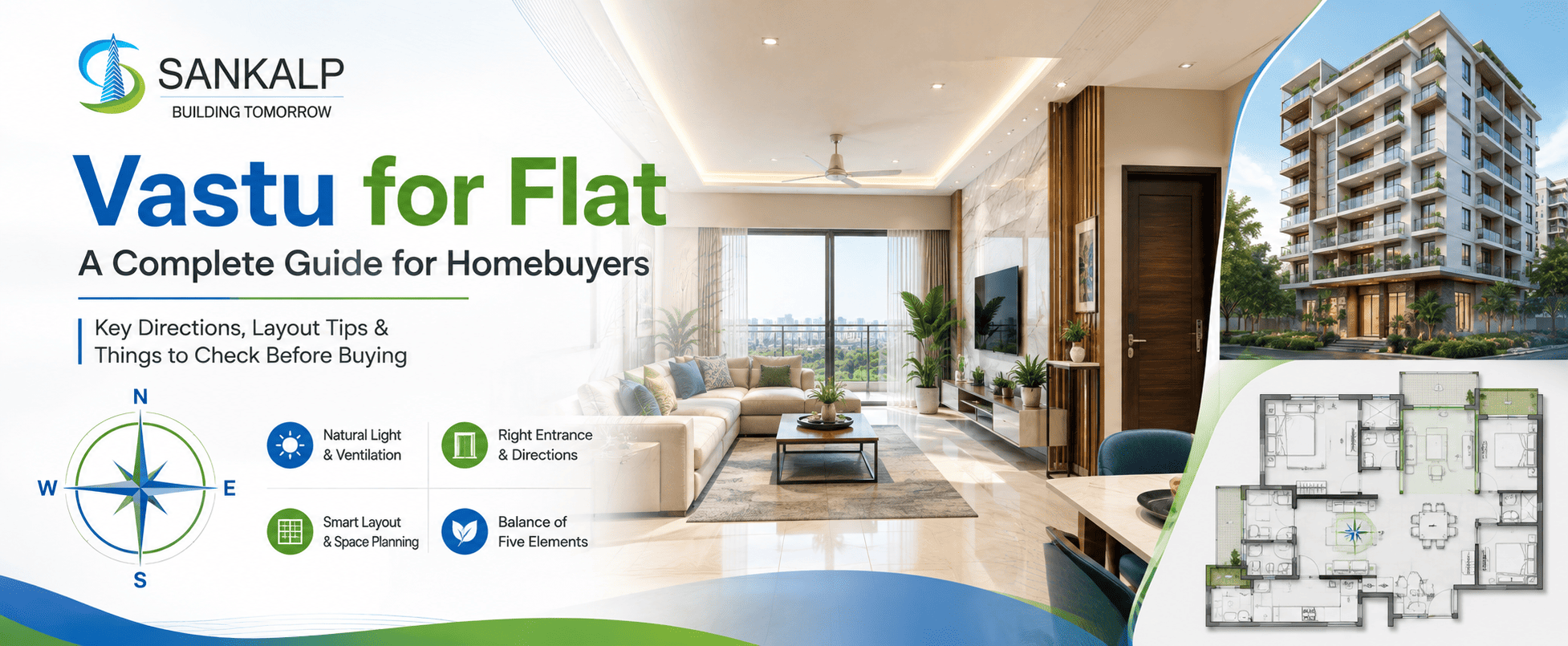
Vastu for Flat: Best Directions, Layout and Tips for Homebuyers
Vastu for Flat is the practice of applying traditional Indian spatial principles to an apartment, so the home feels balanced, bright and comfortable. Many buyers in India want a Vastu-compliant flat, yet apartments raise questions that a standalone house never did. This guide explains what Vastu can and cannot reasonably offer in a modern flat, gives a practical checklist for buyers, and keeps a clear line between traditional belief and sound property judgement. The aim is to help you buy well, using both tradition and reason.
One honest note at the start. Vastu is a traditional belief system, not a proven science. Claims of guaranteed wealth, health or success are not scientifically established. Much of its practical value, such as good light, airflow and a settled layout, benefits any home regardless of belief. Read what follows as respected tradition combined with sensible design thinking.
What is Vastu for a flat?
Vastu Shastra is an ancient Indian tradition of architecture and spatial planning. It links the orientation of a building, its proportions and the placement of spaces to the directions and the five natural elements. Its principles are recorded in classical Sanskrit texts such as the Mayamata, the Manasara, the Samarangana Sutradhara and the Brihat Samhita, and organised through a grid diagram known as the Vastu Purusha Mandala.
Applied to an apartment, Vastu for Flat looks at the entrance direction, the internal layout, natural light and the placement of each room. The tradition suggests that a balanced layout supports wellbeing. Whether one accepts the spiritual claims or not, the underlying attention to orientation, light and order has real practical merit.
How Vastu for a flat differs from Vastu for a house
This is where honesty matters most. Classical Vastu was developed around open plots, independent buildings, temples and low-rise structures. It was not written for modern high-rise apartments. So some principles carry over sensibly to a flat, while others simply cannot apply.
What a buyer can reasonably assess at the flat level:
- The direction the main door faces
- The internal layout and room placement
- Natural light and ventilation
- The shape and proportions of the rooms
What lies outside a single flat's control:
- The tower's overall orientation and shared entrances
- Common lobbies, lifts and staircases
- Plumbing and service shafts fixed by the building design
- The position of the flat within the block
Because so much is fixed by the building, apartment Vastu is about working sensibly within what you can influence, not chasing an ideal that a shared structure cannot deliver. Interpretations also vary between Vastu schools, so treat guidance as flexible rather than absolute.
Best direction for a flat
Buyers exploring Vastu for Flat often ask which facing is best. In the tradition, north and east-facing flats are valued for light and energy, but no direction is universally good or bad.
- North-facing flats are associated with wealth in the tradition and enjoy steady light
- East-facing flats catch the morning sun, and Vastu for flat east facing setups are popular for this reason
- South-facing flats are perfectly livable, and a south-facing flat Vastu layout works well with the right internal plan
- West-facing flats receive good afternoon light and suit many households
One important clarification: "flat facing" should be defined clearly. It may mean the direction the main door faces, or the direction the balcony or main windows face. Different Vastu schools read this differently, so confirm what is meant before drawing conclusions. Vastu for flats facing north is often discussed, but a well-planned flat in any direction can be comfortable.
Vastu for a flat entrance
In Vastu for Flat, the main door carries the most weight, seen as the point where energy enters.
- A flat entrance Vastu placement in the north, east or north-east is commonly preferred
- Keep the entrance area clean, well-lit and welcoming
- Use a solid, good-quality door
- Avoid clutter or shoe racks blocking the doorway
Separate tradition from practice here. The direction is the Vastu element. A well-lit, accessible, welcoming entrance is simply good design that benefits any home.
Vastu for a flat kitchen
In Vastu for Flat, the kitchen belongs to the fire element, so its zone matters.
- Kitchen Vastu for flat commonly favours the south-east, the fire corner
- The north-west is a widely accepted alternative
- Cooking while facing east is traditionally preferred
- Keep the stove (fire) and sink (water) apart where the layout allows
- Ensure strong ventilation
The fire-and-water separation is traditional Vastu guidance. Good ventilation and a practical work triangle, though, are simply sound kitchen design.
Vastu for a flat bedroom
Rest and stability guide bedroom placement.
- Bedroom Vastu for flat places the master bedroom in the south-west where possible
- Sleeping with the head toward the south or east is traditionally advised
- Keep the headboard against a solid wall
- Position wardrobes along the south or west
- Avoid a mirror directly facing the bed
Natural light and ventilation matter here too, and a calm, uncluttered room supports good sleep whatever one's beliefs.
Vastu for a flat pooja room
Few flats have a dedicated prayer space, so this needs a practical approach.
- The north-east is the traditionally preferred zone for a pooja space
- Idols are placed so those praying face east or north
- In a compact flat, a small shelf, niche or cabinet in the north-east or east corner works well
- Keep it clean, calm and separate from bathrooms
- Avoid placing it in a bedroom or under a staircase where possible
For apartments without room to spare, a tasteful wall-mounted or corner unit respects the tradition without needing a separate room.
Vastu for a flat balcony
Balconies suit the north and east in the tradition, which also happens to bring good light.
- North and east-facing balconies are traditionally favoured
- They invite morning light and fresh air
- Use the space for plants and greenery
- Keep it tidy and usable rather than a dumping spot
Vastu for a flat living room
The living room works well in the north, east or north-east.
- Place heavier furniture toward the south and west
- Keep windows clear for light and air
- Arrange seating so hosts face north or east where practical
- Manage clutter, since an open, tidy room feels better and is easier to live in
Vastu for a flat study room or home office
For focus and calm, a few simple points help.
- Face north or east while studying or working
- Place the desk against a solid wall, not a window, for a sense of support
- Ensure good lighting and quiet
- Keep the desk tidy and the space private
Most of this is sound advice for concentration, quite apart from tradition.
Vastu for a flat bathroom and toilet
Bathrooms need care in both tradition and practice.
- Traditionally, the north-west or west is preferred for toilets
- The north-east and the centre are traditionally avoided
- Good ventilation and drainage matter most in practice
- Keep bathrooms from sharing a wall with the kitchen or pooja space where possible
Here the practical points, ventilation, waterproofing and sanitation, are governed by building design and plumbing codes, which take priority over any traditional preference.
Vastu for different flat sizes
Buyers can assess Vastu for Flat across configurations.
- 1 BHK: focus on the entrance direction, kitchen zone and good light, since space is limited
- 2 BHK: check the entrance, kitchen and the master bedroom placement
- 3 BHK: more scope to align the entrance, kitchen, bedrooms and a pooja corner
- 4 BHK and larger: the most flexibility to match rooms to favoured directions
Larger flats allow closer alignment with tradition, but a smaller flat can still be comfortable and well-lit.
Vastu for high-rise flats
High-rise living raises fair questions for Vastu for Flat. At the apartment level, you can assess the door direction, the internal layout, and the light and ventilation. The tower's orientation and shared services are fixed by the building.
On the common belief that certain floors are lucky or unlucky, there is no reliable basis for treating any specific floor number as universally good or bad. Choose a floor for light, air, view, noise and convenience, which are things you can actually judge.
Ready-to-move vs under-construction flats
Each stage lets you check different things.
- Under-construction: study the floor plan for the entrance direction, room placement and light, before committing
- Ready-to-move: verify the actual light, ventilation, layout and finish in person, which a plan cannot fully show
A ready home lets you confirm with your own eyes what an under-construction plan only promises.
Vastu and modern architecture
Vastu preferences can usually coexist with modern building requirements, and where they conflict, safety and law come first. A good home balances several things:
- Building codes and structural safety
- Fire safety and accessibility
- Natural ventilation and daylight
- Energy efficiency and sustainable design
Sensibly applied, Vastu's emphasis on light, air and orientation aligns well with good contemporary design. It should never override fire safety, structural engineering or legal compliance.
Common Vastu mistakes homebuyers should avoid
Balance is everything. These are the traps to avoid.
- Choosing a flat on Vastu alone, ignoring everything else
- Overlooking RERA registration and legal approvals
- Ignoring construction quality and the builder's record
- Discounting location, connectivity and daily convenience
- Neglecting ventilation and daylight
- Spending heavily on structural changes based on unverified advice
A home is a major financial decision. Vastu can be one factor, never the only one.
Vastu for flat: practical homebuyer checklist
Weigh tradition alongside the checks that truly protect your money.
- Vastu preferences that matter to you
- RERA registration verified on the state portal
- Legal title and approvals confirmed
- Builder reputation and delivery record
- Construction quality
- Location and connectivity
- Amenities and daily convenience
- Budget, home loan and EMI comfort
- Maintenance costs
Families comparing 3 BHK flats in Vaishali Nagar, or larger 5 BHK flats in Vaishali Nagar, can weigh Vastu alongside these practical checks. The same applies to 3 BHK flats in Jagatpura and other apartments in Jaipur.
Flat feature comparison table
| Flat feature | Common Vastu preference | Practical homebuyer check | Important note |
|---|---|---|---|
| Main entrance | North, east or north-east | Well-lit, accessible, secure | Direction is fixed by the building |
| Kitchen | South-east (fire corner) | Ventilation, layout, plumbing | Position often fixed in flats |
| Master bedroom | South-west | Light, air, quiet, size | Sleep direction is adjustable |
| Pooja space | North-east | A clean, calm corner | Compact units can use a niche |
| Balcony | North or east | Light, airflow, usable space | Also great for plants |
| Living room | North, east or north-east | Light, seating, low clutter | Furniture placement is flexible |
| Bathroom | North-west or west | Ventilation, drainage, waterproofing | Codes and plumbing take priority |
| Study room | Face north or east | Light, quiet, privacy | Desk placement is easy to adjust |
What Vastu experts and architects may disagree about
Vastu is not a single fixed rulebook. Different schools and practitioners interpret it differently, which is worth knowing before you act.
- Flat facing: whether it means the door, the balcony or the main windows
- Entrance placement: the exact preferred sub-direction
- Kitchen direction: the south-east versus alternatives when the layout forces a choice
- Bathroom placement: how strictly to read the traditional cautions
- Floor selection: whether floor number matters at all
- Remedies: which corrections, if any, are appropriate
No single practitioner's view is a universal rule. If a reading matters to you, consult a qualified practitioner, and weigh it alongside architectural and practical judgement.
Choosing a Vastu-friendly flat in Jaipur
Applying Vastu is easier when a home is well planned, well lit and well ventilated from the start. When buying, look for a favourable entrance direction, sensible room placement and plenty of natural light. Two Sankalp Group developments are worth a look for buyers who want to apply Vastu sensibly.
- Spectrum 21, Vaishali Nagar: a 21-floor residential development in an established, well-serviced belt. Its range of configurations lets buyers choose a unit with a favourable entrance direction and a layout that suits their Vastu preferences. The emphasis on open, light-filled homes with good ventilation makes it easier to place the kitchen, bedrooms and a pooja corner thoughtfully.
- The Index, Jagatpura: a commercial and mixed-use development in a fast-growing corridor, suited to those combining home and business interests. Well-planned units with good light and airflow give buyers room to align the interior with Vastu principles.
With both projects, the practical approach is the same one this guide recommends. Choose a unit whose entrance, light and layout work for you, then arrange the interior to match the Vastu points that matter most. Among the top builders in Jaipur, those who plan open, well-lit and well-ventilated homes make it far easier to follow Vastu sensibly. When you look at flats in Jaipur, confirm the unit is legally clear and RERA registered first, then align the interior with your Vastu preferences.
Conclusion
Vastu for Flat works best as one thoughtful factor in a bigger, rational decision. Consider the entrance direction, the room layout, and above all the natural light and ventilation you can actually assess. Remember that classical Vastu was built for plots and low-rise buildings, that interpretations differ, and that these are traditions rather than guarantees. Verify RERA, legal approvals, construction quality, location and budget with equal care. Balance tradition with reason, and you make a choice that serves both your beliefs and your practical wellbeing.
FAQs
1. Is Vastu applicable for flats?
Partly. You can assess the entrance direction, internal layout, light and ventilation of a flat. However, the tower's orientation, shared lobbies and service shafts are fixed by the building, so apartment Vastu means working sensibly within what you can influence.
2. Which direction facing flat is good as per Vastu?
North and east-facing flats are traditionally valued for light and energy, but no direction is universally good or bad. A well-planned flat in any direction can be comfortable. Clarify whether "facing" means the door, balcony or windows, since schools interpret it differently.
3. How can I check Vastu before buying a flat?
Use the floor plan and a compass to note the entrance direction and room placement, then check natural light and ventilation in person. Weigh this alongside RERA registration, legal approvals, construction quality, location and budget.
4. How can I correct Vastu in a flat?
Most corrections are gentle: declutter, improve lighting, use light colours, add plants, and adjust furniture and sleep direction. Avoid expensive structural changes based on unverified claims, since a flat's core structure is shared and fixed.
Research and reference notes
This article draws on the following types of sources for concepts and context, not for copied text:
- Classical Vastu and Shilpa Shastra texts, including the Mayamata, Manasara, Samarangana Sutradhara and Brihat Samhita, for the origins of Vastu principles and the Vastu Purusha Mandala
- Recognised academic and architectural writing on traditional Indian architecture for historical context
- Credible real estate and design publications for modern apartment-related interpretation
- General guidance from qualified Vastu practitioners and architects, noting that interpretations vary between schools
Where interpretations differ, the article says so rather than presenting one view as definitive. No statistics, quotations or expert names have been invented, and popular blogs or social media were used only to understand common questions, not as authoritative sources.
Note
Vastu is a traditional belief system, not a scientific method. This guide shares its principles for readers who value them, alongside practical property advice. Nothing here is a guarantee of any outcome, and no property decision should rest on Vastu alone.

Anil Shah
The Anil Shah editorial team writes about Jaipur real estate - market trends, home-buying guides, RERA updates and investment insights - drawing on 25+ years of building landmark residential and commercial projects across the city.
Looking for your dream property in Jaipur?
Explore RERA-certified homes & commercial spaces by Sankalp Group. Book a free site visit today.