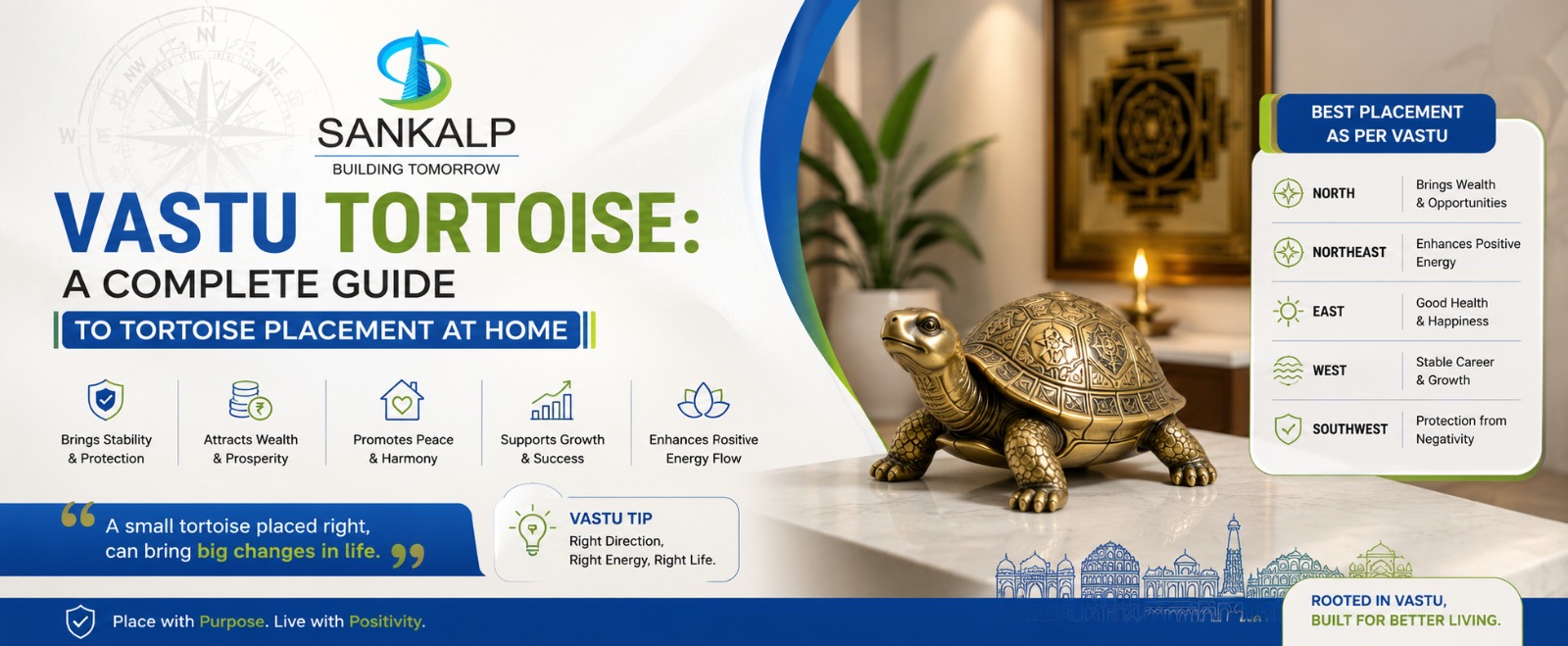
Walk into a Jaipur home and you may spot a small brass tortoise near the entrance or on a north-facing shelf. The vastu tortoise is one of the most common symbols in Indian households, valued in tradition for what it represents rather than what it does. This guide explains what the tortoise means in Vastu Shastra, where the tradition places it, which materials are used, and one legal point every reader should know before bringing a tortoise home.
What the Tortoise Represents
In Hindu tradition, the tortoise carries deep symbolic weight. Kurma, the tortoise, is one of the ten avatars of Vishnu, who supported Mount Mandara during the churning of the ocean. From that story comes the tortoise's association with patience, endurance and steady support.
Tortoise and vastu shastra connect through a few consistent ideas.
- Longevity, since tortoises live remarkably long lives
- Stability and grounding, because the shell suggests a strong, protected base
- Patience and steady progress rather than sudden change
- Protection, as the shell shields what is within
Understanding the symbolism helps, because the placement rules follow from what the tortoise is meant to signify.
Where to Place a Tortoise According to Vastu
Traditional practice associates different directions with different aspects of life, and the placement of a tortoise statue at home follows that logic.
- North is the most commonly recommended direction, linked in Vastu with career and flow of opportunity
- North-east suits a meditation or prayer space, associated with clarity and calm
- East is considered suitable for health and family wellbeing
- The centre of the home, the Brahmasthan, is sometimes used for overall stability
A crystal or metal tortoise vastu placement is often kept on a small table, shelf or in the living room where it is visible, rather than tucked away.
Where the Tradition Says Not to Place It
The cautions matter as much as the placements.
- Avoid the bedroom, since Vastu treats it as a space for rest rather than active symbols
- Avoid bathrooms and store rooms, which are considered unsuitable for sacred objects
- Do not place it facing outward toward the main door, as the tradition prefers it facing into the home
- Keep only one, since multiple tortoise statues in home spaces are generally discouraged
- Replace a chipped or broken figure, as damaged objects are considered inauspicious
Materials and What Each Is Used For
Different materials are associated with different intentions in vastu for tortoise placement.
- Brass tortoise vastu practice links the metal with prosperity and is among the most popular choices
- Metal, particularly in the north, is associated with career and stability
- Crystal is used in the north-east for clarity and calm
- Wood suits the east, tied to growth and health
- Jade or green stone is associated with harmony
Some households keep a metal tortoise in a shallow bowl of water, which combines the tortoise with the water element in the northern direction.
An Important Legal Point
This is the part most articles skip, and it matters. Native Indian tortoise species, including the Indian star tortoise, are protected under the Wildlife Protection Act, 1972. Keeping them as pets is illegal, and the trade in them is a punishable offence.
So when Vastu texts and practitioners speak of a tortoise at home vastu practice, they refer to a statue or figurine, not a live animal. If you want the symbol, buy a brass, crystal or wooden figure from a regular shop. Never buy a live tortoise, however it is marketed.
Keeping Perspective
Vastu Shastra is a traditional system of architecture and placement with deep cultural roots in India. Many families follow it for a sense of order and continuity, and there is no harm in that. Treat a tortoise in house vastu practice as a cultural or personal preference rather than a substitute for practical decisions about a home.
Structural quality, ventilation, natural light and legal clarity affect daily life far more than the position of any object. Buyers looking at flats in Jaipur are usually better served by checking the approved plan and RERA registration first, then arranging the interiors to their own beliefs afterwards.
Applying Vastu When Buying a Home
Many buyers ask about Vastu compliance before purchase, and some developers design with it in mind, particularly on entrance orientation and room placement. If it matters to you, raise it early rather than after booking.
- Ask about the main entrance direction and the position of the kitchen and prayer space
- Check natural light and cross ventilation, which Vastu and good design both favour
- Among the top builders in Jaipur, several offer layout options that suit common Vastu preferences
Whatever your view, property in Jaipur should be judged on title, approvals and construction quality first. Apartments in Jaipur that are legally sound and well built give you a home worth arranging thoughtfully.
FAQs
1. Which direction is best for a tortoise according to Vastu?
North is the most commonly recommended, associated with career and opportunity. North-east suits a prayer or meditation area, and east is linked with health.
2. Can I keep a live tortoise at home?
No. Native Indian tortoise species are protected under the Wildlife Protection Act, 1972 (strengthened by the 2022 amendment), and keeping them is illegal. Vastu practice refers to symbolic statues, not live animals.
3. Which material is best for a Vastu tortoise?
Brass and metal are the most popular, especially for the north. Crystal is used in the north-east and wood in the east, according to traditional practice.
4. Should the tortoise face the door?
Traditional guidance places it facing into the home rather than outward toward the main door.

Anil Shah
The Anil Shah editorial team writes about Jaipur real estate - market trends, home-buying guides, RERA updates and investment insights - drawing on 25+ years of building landmark residential and commercial projects across the city.

Looking for your dream property in Jaipur?
Explore RERA-certified homes & commercial spaces by Sankalp Group. Book a free site visit today.