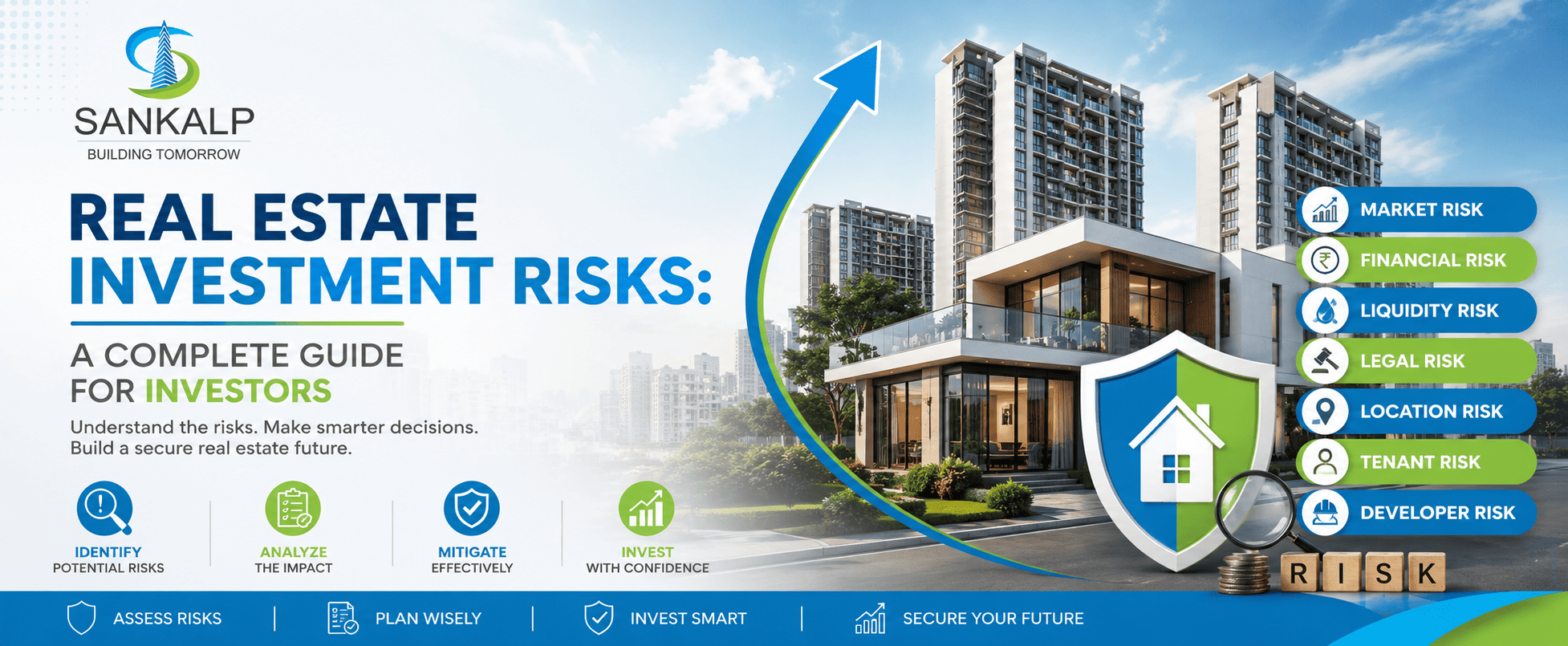
Real Estate Investment Risks: A Complete Guide for Investors
Property is often called a safe investment, but no investment is truly without risk, and real estate is no exception. Understanding real estate investment risks before you buy is what separates a sound decision from an expensive mistake. This guide walks through the main risks in plain language, from market swings to legal traps, and ends with a practical checklist and comparison table to help you protect your money. The aim is not to scare you off property, but to help you go in with your eyes open.
Understanding Real Estate Investment Risks
Investment risk is simply the chance that an investment performs worse than you expected, or loses value. With property, the sums are large and the decisions hard to reverse, so the stakes are high.
Real estate is not risk-free. Prices can fall, tenants can leave, and legal problems can surface years later. Risk and return are linked: higher potential returns usually come with higher risk, and a genuinely low risk property investment often means accepting steadier, more modest gains. Assessing the risks before buying, rather than after, is the heart of sensible investing.
Market Risk
Property values move with the wider market, and they can fall as well as rise.
- Prices respond to shifts in demand and supply
- Economic slowdowns cool the whole market
- Local conditions can differ sharply from national trends
Real estate market risk is tied to cycles. Buying near the top of a cycle and needing to sell in a downturn is how many investors lose money, so understanding where a market sits matters.
Location Risk
A property is only as good as its location, and a weak one drags down both rent and resale.
- Poor connectivity and limited public transport
- Lack of schools, hospitals and daily conveniences
- Few local employment opportunities
- Overdependence on a single promised project
Researching the location thoroughly, its infrastructure, demand and future plans, is one of the best defences against loss.
Liquidity Risk
Liquidity risk in real estate is one of the biggest differences between property and financial assets. You cannot sell a flat with a click.
- Finding the right buyer can take weeks or months
- Transaction costs are high on both sides
- A poor market can leave a property unsold for a long time
By contrast, listed instruments like shares or REITs can be sold quickly. This is why liquidity should be part of every property decision: ask how easily you could exit before you enter.
Rental Vacancy Risk
If you buy to let, an empty property earns nothing while costs continue.
- Demand varies by area and season
- Finding reliable tenants takes time
- Turnover creates gaps between tenancies
Choosing areas with genuine rental demand, and pricing sensibly, reduces the risk of long vacancies.
Tenant Risk
Even an occupied property carries risk from the tenant.
- Late or missed rent payments
- Damage to the property
- Disputes and frequent turnover
Proper tenant screening and a clear, registered rent agreement are the simplest ways to reduce these problems before they start.
Interest Rate and Financing Risk
Most buyers use a loan, and borrowing carries its own risks.
- Rising interest rates increase your EMI on a floating-rate loan
- Higher EMIs strain your monthly budget
- Overleveraging, borrowing more than you can comfortably repay, magnifies every other risk
Keeping your loan within a comfortable share of income protects you if rates climb or income dips.
Construction and Developer Risk
This matters most for under-construction homes, where you pay before you receive.
- Project and possession delays
- Construction quality problems
- The builder running into financial trouble
- Changes to the promised specifications
Real estate development risks are best managed by checking the developer's track record and RERA registration. Among the top builders in Jaipur, the reliable ones have a clear delivery history you can verify.
Legal and Title Risk
Legal problems are slow and costly to fix, which makes due diligence essential.
- Disputed or incomplete ownership
- Encumbrances or loans against the property
- Unauthorised construction or missing approvals
- Ongoing litigation
Verify the title, get an encumbrance certificate and confirm all approvals before paying anything.
Regulatory and Policy Risk
Government rules shape property value, and they can change.
- New regulations or zoning changes
- Tax changes affecting property
- Altered development rules or land-use restrictions
These are largely outside your control, so favour projects with clear, current approvals and avoid anything relying on rules being bent.
Property Damage and Physical Risk
The physical building itself faces risks.
- Natural disasters, fire and flooding
- Structural problems
- Damage from poor maintenance
Building insurance and a proper inspection before purchase help protect against these.
Maintenance and Operating Cost Risk
Owning a property means ongoing costs that eat into returns.
- Repairs and renovations
- Society maintenance charges
- Property taxes, insurance and utilities
- Unexpected large expenses
Budgeting for these from the start keeps them from turning a good investment into a drain.
Rental Yield Risk
The rent you actually earn may be lower than you hoped.
- Real income can fall short of projections
- Rising costs reduce your net return
- Rent may not keep pace with expenses
Always compare gross rental yield with net yield, which subtracts costs, since the net figure is the honest one.
Overvaluation Risk
Paying too much is a risk in itself, and an easy one to fall into.
- Emotional buying pushes prices up
- Asking prices can be higher than real transaction values
Compare actual recent transactions, not just quoted prices, and consider an independent valuation before committing.
Infrastructure and Development Risk
Much of an area's promise rests on future infrastructure, which may not arrive as planned.
- Proposed projects can be delayed or cancelled
- New roads or metro lines may not develop on schedule
Distinguish clearly between announced, approved, under-construction and completed projects. A funded, approved project like Jaipur Metro Phase 2 carries far more weight than a mere proposal.
Environmental and Climate Risk
Long-term location suitability includes environmental factors.
- Flood-prone or low-lying areas
- Water availability and quality
- Extreme weather and heat
- Pollution levels
These affect both comfort and long-term value, so check them as part of your research.
Tax and Transaction Cost Risk
The costs of buying and selling reduce your real return, so count them in.
- Stamp duty and registration charges
- Brokerage and legal fees
- Loan processing fees
- Capital gains tax on sale, and ongoing property taxes
These add up to a significant share of the transaction, so factor them into any return calculation from the start.
Concentration Risk
Putting everything into one property, or one city, concentrates your risk.
- Too much capital in a single asset
- Exposure to just one local market
- No diversification to cushion a downturn
REITs, real estate funds and regulated fractional ownership offer ways to spread exposure with smaller sums, which can balance a portfolio.
Fraud and Documentation Risk
Property fraud is real, and verification is your protection.
- Fake or forged documents
- Misrepresented property area
- Unauthorised sellers or fraudulent deals
Always verify ownership and every document independently, and never rely on the seller's word alone.
How to Reduce Real Estate Investment Risks
Most risks shrink with careful, methodical buying. Use this checklist:
- Research the location and its real demand
- Verify property documents and title
- Check RERA registration on the state portal
- Evaluate the developer's track record
- Compare actual market prices, not just asking rates
- Calculate net rental yield honestly
- Maintain an emergency fund
- Avoid excessive debt
- Get independent legal advice
- Inspect the property thoroughly
- Consider insurance
- Diversify where appropriate
Buyers looking at flats in Jaipur, or ready to move flats in Jaipur where you can inspect before buying, can apply this same checklist to protect themselves.
Risk Comparison Table
| Risk | Potential impact | How to reduce it |
|---|---|---|
| Market risk | Property value may decline | Research market cycles |
| Location risk | Lower demand and appreciation | Study infrastructure and demand |
| Liquidity risk | Property may take time to sell | Choose high-demand locations |
| Vacancy risk | Loss of rental income | Invest in rental-demand areas |
| Legal risk | Financial or ownership disputes | Conduct legal due diligence |
| Developer risk | Delays or project issues | Check track record and RERA |
| Interest rate risk | Higher borrowing costs | Avoid excessive leverage |
| Maintenance risk | Reduced returns | Budget for ongoing costs |
| Environmental risk | Property damage or lower demand | Check climate and location risks |
Conclusion
Real estate investment risks are real, but they are also manageable. Market swings, location weakness, liquidity, tenants, financing, legal issues and the rest can each be reduced with research, verification and sensible budgeting. The goal is not to avoid property, but to buy with a clear understanding of what could go wrong and a plan to protect against it. Do that, and you tilt the odds firmly in your favour, whatever the market does next.
FAQs
1. What is the biggest risk in real estate investment?
There is no single biggest risk, but liquidity and location risk are among the most serious, since a poorly located property can be hard to sell and slow to appreciate. Legal risk is also critical, as ownership disputes are costly to resolve.
2. Is real estate a low-risk investment?
It is often steadier than shares, but it is not low-risk or risk-free. A genuinely low risk property investment usually means a well-located, fully verified property bought at a fair price, held for the long term.
3. How can I reduce the risks before buying a property?
Research the location, verify the title and RERA registration, check the developer, compare real market prices, calculate net yield, avoid over-borrowing and get legal advice. Careful verification removes most avoidable risks.
4. Are under-construction properties riskier than ready ones?
They can be, since they carry construction, delay and developer risk. Ready homes let you see exactly what you are buying, while under-construction ones rely on the builder delivering, so check the developer's record and RERA status carefully.

Anil Shah
The Anil Shah editorial team writes about Jaipur real estate - market trends, home-buying guides, RERA updates and investment insights - drawing on 25+ years of building landmark residential and commercial projects across the city.


Looking for your dream property in Jaipur?
Explore RERA-certified homes & commercial spaces by Sankalp Group. Book a free site visit today.